
Overview
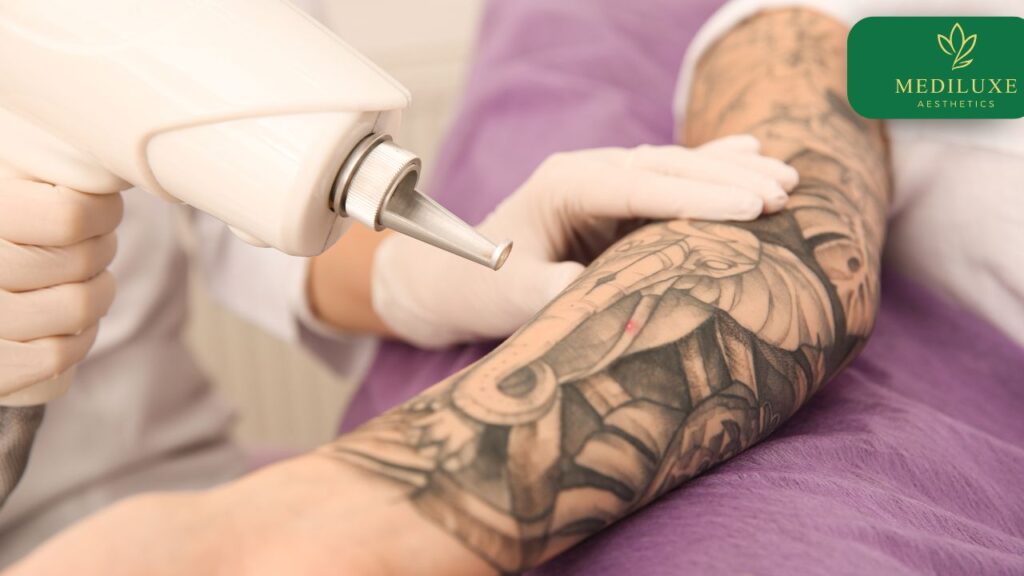
Scarring is the question most people quietly worry about before booking tattoo removal, even if they do not ask it out loud during the consultation. With modern Q-switch and Pico laser technology, scarring is rare when the treatment is done correctly, but it is not impossible, and the difference usually comes down to technique, aftercare, and how the skin is treated between sessions rather than the laser alone.
For real patient results and behind-the-scenes clinic updates, follow Mediluxe on Instagram, or call +91 92118 75290 to speak with the clinic directly.
How Laser Tattoo Removal Actually Works on the Skin
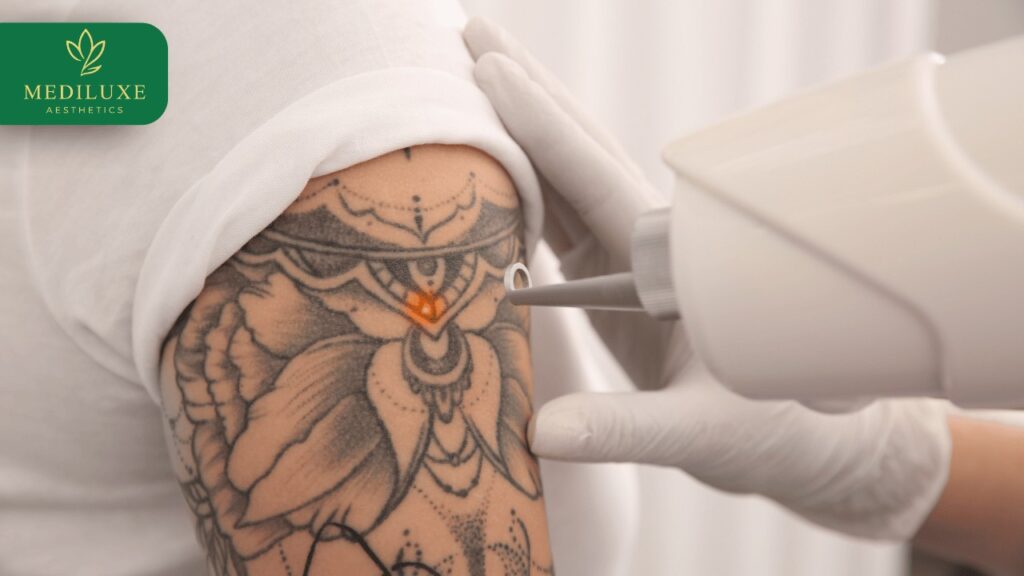
Q-switch and Pico lasers work by breaking tattoo ink into smaller particles that your immune system gradually clears away over the following weeks. Unlike older removal methods that physically abraded or excised skin, modern laser removal targets the ink itself and leaves the surrounding tissue largely undisturbed when the correct settings are used.
This is why the technology matters. Older or poorly calibrated lasers that use excessive energy can damage the surrounding dermis, which is where scarring risk actually comes from, not from the concept of laser tattoo removal itself.
The practical difference between Q-switch and Pico technology comes down to pulse duration. Pico lasers deliver energy in trillionths of a second rather than billionths, which shatters ink into finer particles while generating less heat in the surrounding tissue. Less heat spread generally means a gentler recovery and a lower scarring risk, which is one reason Pico technology has become the more commonly recommended option for denser or more stubborn ink.
What Actually Causes Scarring During the Process
The most common cause of scarring is not the laser itself but what happens between sessions. Picking at blisters or scabs, sun exposure on unhealed skin, and starting the next session before the previous one has fully healed all increase the risk of textural changes or hypopigmentation.
Tattoos with dense, layered ink or those on areas with thinner skin, such as wrists or ankles, carry a slightly higher baseline risk, which is another reason a proper consultation should assess the specific tattoo rather than quoting a generic session count.
Skin tone is also part of this conversation, even when clinics do not always bring it up unprompted. Deeper skin tones carry a somewhat higher chance of temporary post-inflammatory pigmentation change after any laser treatment, which is why settings are adjusted by skin type rather than applied uniformly. Much of this discipline mirrors what matters after other laser-based treatments; our piece on laser hair reduction aftercare in Janakpuri: what matters covers similar principles around sun protection and healing between sessions.
What a Realistic Timeline and Aftercare Routine Looks Like
Removal typically requires multiple sessions spaced six to eight weeks apart, since the skin needs time to clear ink particles and heal between treatments. If you want a fuller picture of how this unfolds over several months, our earlier piece on what the tattoo removal process actually looks like walks through it session by session.
Aftercare between sessions matters as much as the treatment itself. Keeping the area clean, avoiding direct sun exposure, and resisting the urge to pick at peeling skin are the basics that most scarring cases trace back to when they do occur.
In practical terms, a simple day-by-day routine works for most patients. Keep the area clean and dry for the first 24 to 48 hours, apply the ointment your clinic prescribes rather than a generic moisturiser, avoid swimming pools and prolonged bathing until any blistering has fully settled, and keep the area covered with loose clothing rather than anything that rubs against healing skin.
How to Reduce Scarring Risk Before You Even Book
Choosing a clinic that uses calibrated, well-maintained equipment and that assesses your specific skin type and tattoo before starting is the single biggest factor within your control. A rushed consultation that skips this step is a warning sign regardless of how the pricing looks. The same principle, that healing tissue needs time and the right protocol, is also why our piece on why acne scars take so long to fade stresses patience over rushing the next step.
If you are also considering other treatments in parallel, such as chemical peel options in Punjabi Bagh for unrelated skin concerns, it is worth spacing these out from active tattoo removal sessions rather than combining them in the same window.
It is also reasonable to ask a clinic directly how many tattoos of similar ink density and colour they have treated before, and to ask to see the settings they plan to use for your specific case rather than a one-size-fits-all protocol. A clinic confident in its process should not hesitate to answer either question in detail.
When to Seek Follow-Up Care After a Session
Mild redness, swelling, and some blistering in the days after a session are a normal part of the process and usually settle within one to two weeks. What is not normal is redness or swelling that worsens after the first few days, pus or discharge, fever, or blistering that extends well beyond the treated area.
If any of these signs appear, contacting the clinic promptly rather than waiting for the next scheduled session gives the best chance of managing the reaction early and avoiding any lasting textural change.
Conclusion
Scarring from tattoo removal is uncommon when the procedure is done with the right equipment and followed by proper aftercare, but it is not zero risk, and pretending otherwise does patients a disservice. Choosing a clinic that treats the process carefully, session by session, is what actually keeps the risk low. Book a tattoo removal consultation with Mediluxe Aesthetics in Janakpuri
Looking to compare more treatments before you decide? Browse the full Mediluxe blog library for more guides on tattoo removal and laser-based skin treatments.
Frequently Asked Questions
1. Is scarring from laser tattoo removal common?
Ans. No, it is uncommon when modern Q-switch or Pico laser technology is used correctly, and aftercare instructions are followed between sessions.
2. How many sessions does tattoo removal usually take?
Ans. Most tattoos need six to ten sessions spaced six to eight weeks apart, depending on ink density, colour, and skin type.
3. Does tattoo removal hurt more than getting the tattoo?
Ans. Sensations vary by person, but most patients describe it as similar to or slightly more intense than the original tattooing process, and numbing cream can help.
4. Can all tattoo colours be removed equally well?
Ans. Black and dark ink respond best to laser removal. Bright colours like yellow and light green can take longer and may fade more gradually.
5. Does skin tone affect the risk of scarring or pigmentation change after tattoo removal?
Ans. Yes, deeper skin tones carry a slightly higher risk of temporary pigmentation change, which is why laser settings are adjusted based on skin type rather than using one setting for everyone.
6. Can old tattoos that have already faded naturally still be removed without scarring?
Ans. Generally yes, and older, lighter tattoos often respond faster to laser removal with fewer total sessions needed compared to dense, recently done ink.
CTA
Book a tattoo removal consultation with Mediluxe Aesthetics in Janakpuri