
Overview
This is the question most people have before booking their first laser hair reduction session, and very few clinics answer it honestly up front.
The short answer is that laser hair reduction is not technically permanent for everyone. The longer answer is that for most people, the results are lasting enough that the word permanent feels accurate in practice. Understanding the difference matters because it affects expectations going in and how satisfied people feel with the outcome.
At Mediluxe in Janakpuri, laser hair reduction is one of the most consistently requested treatments. Dr Simran Saxena oversees every treatment plan, and the approach is calibrated specifically for Indian skin tones, where the technology settings make a significant difference to both safety and results.
Why Is It Called Reduction and Not Removal?
The laser targets melanin inside the hair follicle. The heat damages the follicle enough to significantly impair its ability to produce hair. But hair follicles are biological structures, and the body does occasionally stimulate new follicle activity over time, particularly in areas driven by hormonal fluctuation.
For most body areas, the reduction after a full course of sessions is dramatic and lasting. Most people see an 80 to 90 per cent reduction that holds for years. For hormonally driven hair, particularly on the chin, jawline, and upper lip in women, some regrowth over time is more common because hormonal levels continue to influence follicle behaviour.
Calling it a reduction rather than a removal is accurate. In practice, most people describe the results as permanent because what comes back, if anything, is so sparse and fine compared to what was there before that it does not change their daily routine.
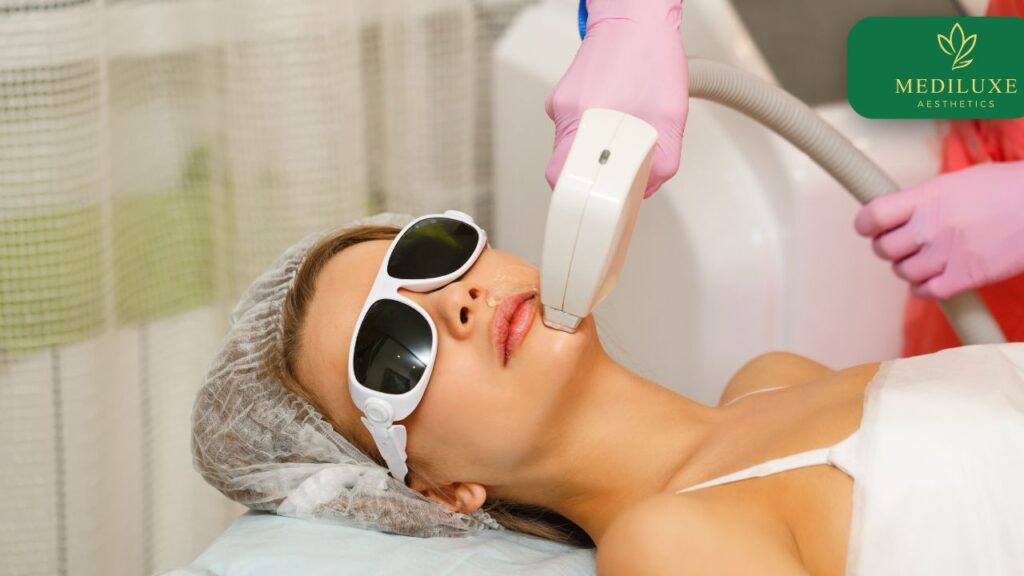
Does It Work Differently on Indian Skin?
This is a genuinely important question that gets glossed over in a lot of general laser hair reduction content.
Older laser technologies, particularly IPL and older diode systems, struggled with darker skin tones because they could not reliably distinguish between the melanin in the hair follicle and the melanin in the surrounding skin. That created a real risk of burns, blistering, and post-treatment pigmentation changes.
Modern diode and Nd: YAG laser systems are designed specifically to work safely across darker skin tones. The wavelength penetrates to the follicle without the same risk of surface skin damage. But settings still need to be adjusted for each patient’s specific skin tone, hair colour, and the area being treated.
At Mediluxe, Dr Simran adjusts parameters before every session. This is not a standard protocol applied to everyone. It is an individual calibration that makes a real difference to safety and outcome for Indian skin specifically.
How Many Sessions Are Actually Needed?
Hair grows in cycles, and only follicles in the active growth phase respond to laser treatment at any given session. This is why multiple sessions are needed, regardless of how effective the technology is. For a detailed breakdown of how many laser hair reduction sessions are needed and why, Mediluxe has covered this separately.
Most people need between 6 and 8 sessions for body areas. Facial areas, particularly hormonal zones, may need more. Sessions are spaced 4 to 6 weeks apart for the body and slightly closer together for the face.
After completing the course, most people do occasional maintenance sessions once or twice a year to address any follicles that become active again. The difference between the original hair density and what remains after maintenance is substantial enough that most people consider it one of the more worthwhile aesthetic investments they have made.
What Areas Can Be Treated at Mediluxe?
Laser hair reduction at Mediluxe covers:
- Full face, including upper lip, chin, and sideburns
- Underarms
- Arms and legs
- Bikini line and Brazilian
- Back and chest
- Stomach and shoulders
Some patients come in for one specific area. Others treat multiple areas in a structured plan. Sessions can be combined to make the process more efficient.
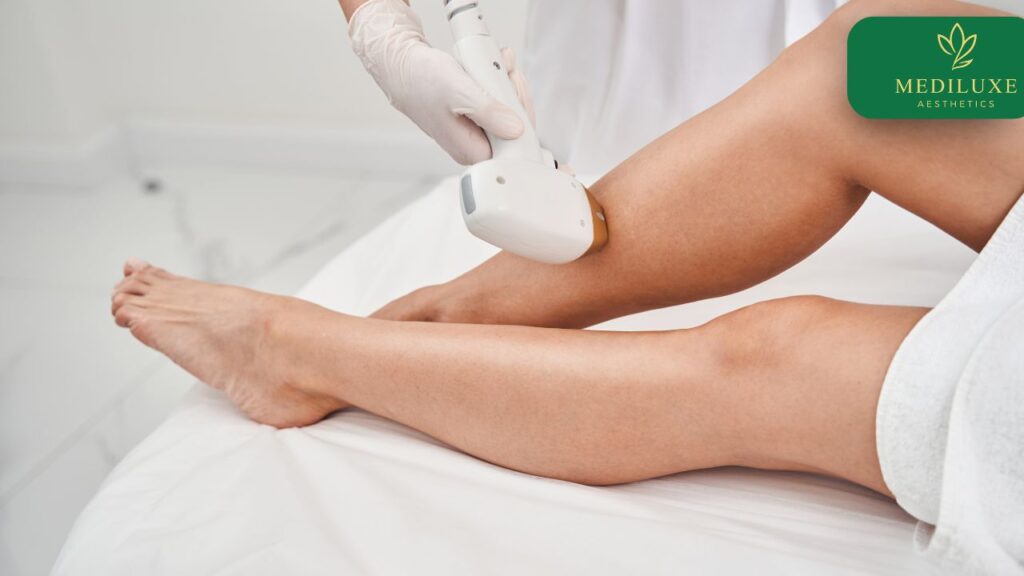
What Happens If Hair Comes Back After a Full Course?
For most body areas, regrowth after a properly completed course is minimal. What does return is typically finer, lighter, and grows more slowly than the original hair.
For hormonal areas where regrowth is more likely, a maintenance session addresses it quickly. The follicles that were treated and then reactivated respond faster and more completely to maintenance sessions than the original course because they are already partially damaged.
If laser treatments at Mediluxe are also being used for other skin concerns like acne and acne scarring or skin rejuvenation, those can be coordinated with hair reduction sessions, depending on the areas being treated.
Conclusion
Laser hair reduction in Janakpuri is not guaranteed to be permanent for every person in every area. But for most people, it is close enough to permanent that the distinction barely matters in daily life. The key is completing the full course, choosing a clinic that calibrates settings properly for Indian skin, and doing the occasional maintenance session for hormonal areas.
Book a Laser Hair Reduction Consultation at Mediluxe, Janakpuri
Frequently Asked Questions
Q. Is laser hair reduction painful at Mediluxe in Janakpuri?
Most people describe it as a quick snap or mild warmth. Modern laser systems include cooling mechanisms that significantly reduce discomfort. Most patients find it very manageable after the first session.
Q. Can I shave between laser hair reduction sessions?
Yes. Shaving is fine and actually recommended between sessions. Waxing and threading are not, because they remove the hair root that the laser needs to target.
Q. What should I do before a laser hair reduction session?
Shave the area 24 hours before treatment. Avoid sun exposure in the days leading up to the session. Come in with clean skin, no creams, deodorant, or products on the treatment area.
Q. Is laser hair reduction safe during the summer in Delhi?
Treatment is possible year-round, but sun protection is essential both before and after sessions. Dr Simran will advise on any precautions needed based on your skin tone and the areas being treated.