
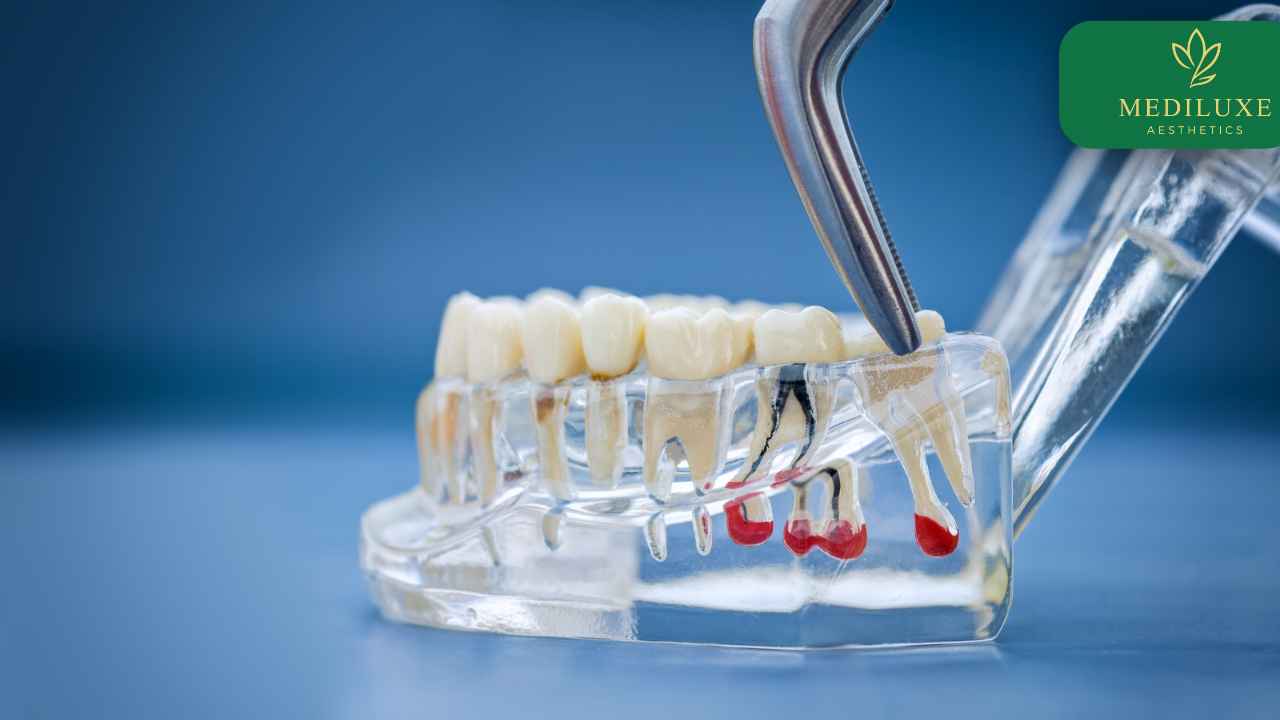
Root Canal vs Tooth Extraction: Which Is Better for a Damaged Tooth?
A severe toothache can make even simple activities like eating, drinking, or sleeping uncomfortable. When a tooth becomes deeply infected, cracked, or badly damaged, your dentist may recommend two possible treatments: a root canal or tooth extraction.
But which option is better? Should you try to save your natural tooth, or is removing it the safer and more practical decision?
Root canal vs tooth extraction is not simply a choice between two dental procedures. It is a decision about whether your natural tooth can be preserved and function properly in the long term.
Quick answer: A root canal is generally preferred when an infected or damaged tooth has enough healthy structure and support to be restored successfully. Tooth extraction may be necessary when the tooth is fractured beyond repair, severely decayed, or has inadequate supporting bone. A dental examination and X-rays help determine the appropriate treatment.
At Mediluxe Aesthetic & Dental Clinic, Janakpuri, New Delhi, patients can explore root canal treatment and tooth extraction options based on their individual dental condition.
Understanding the differences in pain, recovery, treatment costs, and long-term oral health can help you make an informed decision.
Root Canal or Extraction: Which Is the Right Choice?
If a tooth is infected but can still be restored, root canal treatment is often the preferred option because it preserves the natural tooth.
However, saving a tooth is not always possible.
For example, a tooth with deep decay may still be treatable with a root canal followed by a crown. On the other hand, a tooth with an extensive vertical root fracture or severe loss of supporting structures may require extraction.
The decision usually depends on four important factors:
- Extent of damage: How much healthy tooth structure remains?
- Condition of the roots: Are the roots intact and suitable for treatment?
- Gum and bone support: Is there enough healthy periodontal support to retain the tooth?
- Long-term restorability: Can the tooth be rebuilt to withstand normal biting and chewing?
A dentist evaluates these factors through a clinical examination, diagnostic tests, and appropriate dental imaging.
The aim is to choose a treatment that addresses infection or pain while providing a predictable long-term outcome.
Root Canal vs Tooth Extraction: Quick Comparison
| Factor | Root Canal Treatment | Tooth Extraction |
| Main purpose | Treat infected or damaged pulp while preserving the tooth | Remove a tooth that cannot or should not be retained |
| Natural tooth | Preserved | Removed |
| Procedure | Cleaning, disinfecting, filling, and sealing root canals | Removing the tooth from its socket |
| Pain during treatment | Local anaesthesia helps control discomfort | Local anaesthesia helps control discomfort |
| Recovery | Usually mild tenderness for a few days | Soreness, swelling, and socket healing |
| Appointments | One or more, plus final restoration when required | Often one for removal, with possible replacement visits |
| Additional treatment | Filling or crown may be required | Implant, bridge, or denture may be considered |
| Initial cost | May be higher than a simple extraction | Simple extraction may have a lower upfront cost |
| Long-term cost | Includes restoration and possible future dental care | May include tooth replacement and maintenance |
| Best suited for | An infected or damaged but restorable tooth | A non-restorable tooth or another clear extraction indication |
The most important difference: Root canal treatment attempts to retain your natural tooth. Extraction removes it, and replacing the missing tooth may require additional procedures.
What is Root Canal Treatment?
Root canal treatment, commonly called RCT, is a dental procedure performed when the soft tissue inside a tooth, known as the pulp, becomes irreversibly inflamed or infected.
The pulp contains nerves, blood vessels, and connective tissue.
It can become damaged because of:
- Deep tooth decay
- Cracks or fractures
- Dental trauma
- Repeated dental procedures
- Infection extending into the pulp
When pulp tissue is severely damaged, a normal filling may no longer be enough to resolve the problem.
Root canal treatment removes the affected pulp, cleans the internal canal system, and seals it to reduce the risk of reinfection.
How is Root Canal Treatment Performed?
The procedure generally involves the following steps.
Step 1: Dental examination and X-ray
The dentist examines the tooth, assesses symptoms, performs relevant tests, and uses dental imaging to understand the condition of the roots and surrounding bone.
Step 2: Local anaesthesia
The area is numbed to help keep the patient comfortable throughout treatment.
Step 3: Removal of infected pulp
A small opening is created in the tooth to access and remove the infected or inflamed pulp tissue.
Step 4: Cleaning and disinfection
The root canals are carefully cleaned, shaped, and disinfected.
Step 5: Filling and sealing
The cleaned canals are filled with a suitable dental material and sealed.
Step 6: Final restoration
The tooth is restored with a permanent filling or crown, depending on how much tooth structure remains and the forces it must withstand.
Some root canals are completed in one appointment, while more complex cases require additional visits.
What Are the Benefits of Saving a Tooth With RCT?
When the tooth is suitable for treatment, the main advantages include:
- Preserving the natural tooth
- Maintaining the existing bite and tooth position
- Restoring chewing function
- Avoiding an immediate need for tooth replacement
- Retaining the natural appearance of the smile
- Potentially reducing the overall amount of dental work required
A properly treated and restored tooth can remain functional for many years, although the result depends on the tooth’s condition, restoration, and ongoing oral care.
Patients looking for root canal treatment in Janakpuri can learn more about Mediluxe’s approach, including diagnostic imaging and rotary root canal techniques.
What Happens During Tooth Extraction?
Tooth extraction involves removing a tooth from its socket in the jawbone.
A dentist may recommend extraction when the tooth cannot be predictably restored or when removal is necessary for another clinical reason.
There are two main types of extraction.
Simple Tooth Extraction
A simple extraction is generally performed when the tooth is visible and accessible.
After administering local anaesthesia, the dentist carefully loosens and removes the tooth using appropriate dental instruments.
Surgical Tooth Extraction
A surgical extraction may be required when a tooth is broken below the gumline, impacted, or difficult to access.
The procedure may involve making a small incision in the gum and, in some cases, removing a limited amount of surrounding bone or dividing the tooth into sections.
The complexity depends on the tooth’s location, root anatomy, and condition.
What Happens After a Tooth Is Removed?
Following extraction, a blood clot forms within the empty socket and plays an important role in healing.
Over the following days and weeks, the gum tissue begins to recover. Bone healing and remodelling take longer.
Depending on which tooth was removed and the patient’s oral health needs, the dentist may discuss replacement options such as:
- Dental implants
- Dental bridges
- Partial dentures
Not every extracted tooth necessarily requires replacement. For example, the decision after wisdom tooth removal differs from replacing a functional molar.
Learn more about simple and surgical tooth extractions at Mediluxe.
Can an Infected Tooth Be Saved With a Root Canal?
Yes. Even a badly infected tooth may be saved with root canal treatment if it has sufficient healthy structure, adequate supporting tissues, and a favourable long-term prognosis.
An infection inside the tooth does not automatically mean extraction is necessary.
For example, a tooth with deep decay and an infected pulp may still be treatable if the dentist can remove the infection and restore the remaining structure.
However, the dentist must assess whether saving the tooth is realistic.
Factors That Determine Whether a Tooth Can Be Saved
1. Remaining tooth structure
There must be enough sound tooth structure to support a durable restoration. Extensive decay below the gumline can make this difficult.
2. Root condition
The roots must be assessed for fractures, severe damage, and anatomical complications.
3. Bone support
Healthy supporting bone and periodontal tissues are important for the tooth’s stability.
4. Infection severity and location
An infection around the root does not always prevent successful treatment, but its extent and underlying cause affect the prognosis.
5. Ability to restore the tooth
A root canal alone is not enough if the tooth cannot subsequently be rebuilt to function properly.
Tooth-Saving Decision Flowchart
Step 1 — Is the tooth painful, infected, or severely damaged?
↓ Yes
Step 2 — Dental examination, pulp testing, gum assessment, and X-ray
↓
Step 3 — Can the tooth be predictably restored?
- Yes: Consider root canal treatment when the pulp condition requires it.
- Uncertain: Further tests or an endodontic specialist’s assessment may help.
- No: Extraction may be appropriate.
↓
Step 4 — If root canal is selected
Treat the root canals → restore the tooth with a filling or crown → schedule follow-up and maintenance.
Step 5 — If extraction is selected
Remove the tooth → allow healing → assess whether replacement with an implant, bridge, or denture is appropriate.
This pathway is educational. A dentist must make the final treatment recommendation after examining the tooth.
When Is Tooth Extraction Better Than Root Canal Treatment?
Although preserving natural teeth is generally desirable, there are situations in which extraction offers a more predictable outcome.
1. Severe Tooth Decay
If decay has destroyed too much of the tooth, there may not be enough healthy structure to support a lasting filling or crown.
Even if the root canals can be treated, the tooth may remain unsuitable for restoration.
2. Vertical Root Fracture
A vertical fracture extending through the root can make saving the tooth difficult or impossible.
The location, extent, and configuration of the fracture determine whether any tooth-saving option remains appropriate.
3. Advanced Periodontal Disease
Severe gum disease can cause significant loss of supporting bone and periodontal attachment.
A tooth with inadequate support may have a poor long-term prognosis despite successful root canal treatment.
4. Extensive Damage Below the Gumline
Deep fractures or decay extending below the gumline may prevent a predictable seal or restoration.
5. Failed Treatment With Limited Retreatment Options
Some teeth develop persistent infection or damage after previous root canal treatment.
In certain cases, retreatment or endodontic surgery can save the tooth. However, extraction may become necessary when these options are unsuitable or unlikely to succeed.
Important: The presence of pain, swelling, or an abscess alone does not prove that extraction is necessary.
A proper diagnosis is essential before deciding to remove a tooth.
Root Canal vs Tooth Extraction: Which Is More Painful?
Pain is one of the biggest concerns when patients compare RCT vs tooth removal.
The good news is that both procedures are commonly performed under local anaesthesia to reduce pain during treatment.
However, neither procedure should be described as guaranteed 100% pain-free.
Pain During Root Canal Treatment
Before starting, the dentist numbs the tooth and surrounding tissues.
Patients may feel pressure or movement during the procedure, but effective anaesthesia generally makes treatment comfortable.
In teeth with severe inflammation, additional anaesthetic techniques may sometimes be required.
The intense pain commonly associated with root canals often comes from the underlying dental infection or inflammation rather than the treatment itself.
Pain During Tooth Extraction
Local anaesthesia is also used during extractions.
Patients may feel pressure as the tooth is loosened. More complex surgical extractions may involve additional manipulation of the surrounding tissues.
The dentist should check that adequate anaesthesia has been achieved before proceeding.
Which Treatment Has an Easier Recovery?
Recovery differs because the procedures affect different tissues.
| Recovery Factor | Root Canal | Tooth Extraction |
| Immediately afterward | Temporary numbness | Temporary numbness and bleeding control |
| Initial discomfort | Mild tenderness or soreness is common | Soreness and swelling are common |
| Eating | Avoid chewing on the treated tooth until advised, particularly before restoration | Soft food and protection of the socket are important |
| Healing | Tenderness often improves over several days | Initial recovery takes days; socket healing continues longer |
| Main concerns | Persistent pain, reinfection, or fracture before restoration | Bleeding, infection, dry socket, or delayed healing |
| Follow-up | Final restoration and review | Healing review and possible replacement planning |
A root canal may involve less tissue trauma than extraction, but the individual experience varies.
For more details about the procedure, read Mediluxe’s article on painless root canal treatment in Janakpuri: visit by visit.
Root Canal vs Extraction: How Long Does Recovery Take?
Understanding recovery helps patients prepare for treatment and return to normal activities safely.
Recovery After Root Canal Treatment
After a root canal, mild tenderness or sensitivity when biting may occur for several days.
Many patients can resume ordinary activities relatively quickly.
However, you should follow the dentist’s instructions regarding:
- Eating after the anaesthetic wears off
- Avoiding hard chewing on the treated tooth
- Taking appropriate pain relief
- Returning for the permanent filling or crown
- Attending follow-up appointments
If discomfort worsens, persists unexpectedly, or is accompanied by increasing swelling, contact your dentist.
Tooth Extraction Recovery
After a simple extraction, discomfort and swelling often begin improving within a few days.
More complex surgical extractions can require a longer recovery period.
The extraction socket generally takes longer to heal completely than the initial soreness takes to settle.
To support healing:
- Keep the gauze in place as directed.
- Avoid vigorous rinsing, spitting, or disturbing the socket for the first 24 hours.
- Eat soft foods and avoid very hot food while the area is numb.
- Avoid smoking and strenuous activity during the initial recovery period as advised.
- Begin gentle oral hygiene and saltwater rinses when your dentist recommends them.
- Take prescribed medications as directed.
A painful condition called dry socket can occur if the blood clot is lost or breaks down before the socket has healed adequately.
If severe pain develops or increases a few days after extraction, contact your dentist promptly.
Root Canal Cost vs Extraction: Which Is More Affordable?
Many patients initially assume that extracting a damaged tooth is cheaper than saving it.
A simple tooth extraction may indeed cost less upfront than a root canal and crown.
However, the complete financial comparison should include treatment after extraction.
What Determines Root Canal Treatment Cost?
The cost of root canal treatment in Janakpuri depends on several factors:
- Whether the tooth is a front tooth, premolar, or molar
- Number and complexity of root canals
- Severity of infection
- Whether this is an initial treatment or retreatment
- Diagnostic imaging and additional procedures
- Whether a permanent filling or crown is required
Back teeth often have more complex root canal systems, which can influence treatment time and cost.
What Determines Tooth Extraction Cost?
Extraction pricing depends on:
- Simple versus surgical extraction
- Tooth position and accessibility
- Root shape and condition
- Whether the tooth is impacted or fractured
- Need for imaging, sutures, or follow-up care
Why Can Extraction Cost More in the Long Run?
Consider the possible treatment pathways.
Option A: Root Canal
Root canal treatment + appropriate final filling or crown + routine maintenance.
Option B: Extraction
Tooth extraction + healing + possible dental implant, bridge, or denture + ongoing maintenance.
If a missing tooth needs replacement, the additional treatment can increase both the overall expense and the number of appointments.
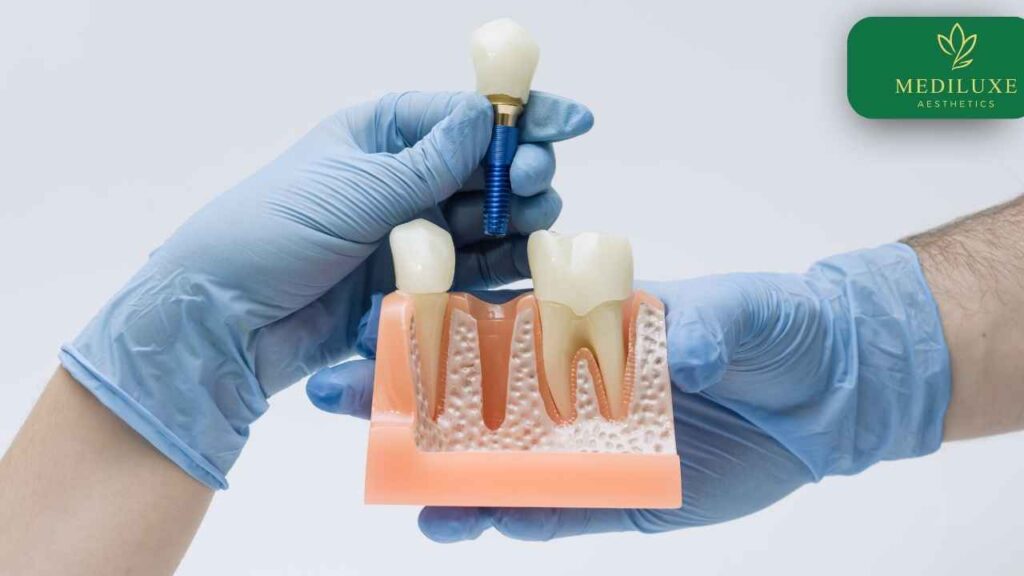
A dental implant, for example, may involve an implant fixture, abutment, crown, and sometimes bone grafting.
A dental bridge may require work on neighbouring teeth.
This is why the initial extraction fee alone is not enough to compare the two options.
Which Is the Better Investment?
There is no universal answer.
Saving a restorable tooth may provide excellent long-term value. However, repeated procedures on a tooth with a poor prognosis may not be the most practical decision.
Patients should ask for an itemised treatment estimate that includes both the immediate procedure and the likely follow-up requirements.
If replacement becomes necessary, Mediluxe also provides dental implant treatment and crowns and bridges.
You can also read How Much Do Dental Implants Actually Cost in Janakpuri? to understand the components of implant pricing.
Do You Need a Dental Crown After a Root Canal?
Not every root canal-treated tooth requires a crown, but many do.
The decision depends on the tooth’s location, the amount of remaining tooth structure, and the forces placed on it during chewing.
Root Canal for Front Teeth
A front tooth with sufficient healthy structure may sometimes be restored successfully with a bonded filling.
Root Canal for Back Teeth
Premolars and molars experience greater chewing forces.
If significant structure has been lost through decay, fracture, or previous restorations, a crown or another protective restoration may be recommended.
A well-designed final restoration is an important part of long-term root canal success.
Completing the root canal without following through with the recommended permanent restoration can increase the risk of leakage or fracture.
Your dentist can explain whether a filling, onlay, or crown is appropriate for your tooth.
What Happens If You Delay Treating an Infected Tooth?
Dental pain can sometimes improve temporarily, even when the underlying problem remains.
For example, the nerve inside an infected tooth may become non-vital, reducing sensitivity while the infection continues to affect surrounding tissues.
Delaying necessary treatment may lead to:
- Increasing tooth damage
- Recurrent or persistent pain
- Dental abscess formation
- Swelling around the gums or face
- Damage to surrounding bone or tissues
- Reduced chances of successfully saving the tooth
An untreated dental infection should not be ignored simply because pain medication provides temporary relief.
Can Antibiotics Cure an Infected Tooth?
Antibiotics may be needed in selected cases, particularly when infection is spreading or systemic symptoms are present.
However, antibiotics alone generally do not eliminate the source of infection inside a tooth.
Definitive dental treatment, such as root canal therapy, drainage, or extraction, may still be necessary.
Do not start antibiotics without appropriate medical or dental advice.
When Should You Seek Urgent Dental Care?
Arrange prompt dental assessment if you experience:
- Severe or persistent toothache
- Pain when biting or chewing
- Swelling near an affected tooth
- A pimple-like bump on the gum
- An unpleasant taste associated with discharge
- A broken or cracked tooth
- Fever accompanying dental pain
Seek immediate emergency medical care if swelling causes difficulty breathing, speaking, or swallowing, or if swelling rapidly spreads toward the eye or neck.
These symptoms can indicate a serious spreading infection.
If you are experiencing significant dental pain or swelling, explore Mediluxe’s emergency dental services and arrange an appropriate assessment.
Root Canal Treatment and Tooth Extraction in Janakpuri at Mediluxe
Choosing between a root canal and tooth extraction can feel difficult, especially when you are already experiencing pain.
The first step is understanding whether the affected tooth can be saved.
At Mediluxe Aesthetic & Dental Clinic, Janakpuri, New Delhi, dental services include root canal treatment, simple and surgical extractions, dental crowns, bridges, and implants.
Mediluxe’s dental services also include digital imaging and restorative treatment options, allowing patients to discuss the condition of their teeth and the available treatment pathways.
During an assessment, the dental team can evaluate the affected tooth, explain the diagnosis, and discuss whether preservation or extraction is more appropriate.
The priority should always be an informed decision based on the tooth’s condition, expected long-term outcome, and the patient’s needs.
If you are searching for painless root canal treatment in Janakpuri, modern dental techniques and local anaesthesia can help make the procedure more comfortable, although individual experiences vary.
To learn more, visit Mediluxe Dental Services or contact the clinic.
Final Thoughts: Save Your Tooth or Remove It?
When comparing root canal vs tooth extraction, the best decision is not necessarily the quickest or cheapest procedure.
It is the treatment most likely to protect your oral health and provide a reliable long-term result.
If your natural tooth can be successfully restored, root canal treatment may allow you to retain it for many years.
If severe decay, extensive fractures, or inadequate supporting tissues make the tooth non-restorable, extraction may be the more appropriate solution.
The key is obtaining an accurate diagnosis before making an irreversible decision.
Experiencing tooth pain or wondering whether your tooth can be saved?
Visit Mediluxe Aesthetic & Dental Clinic to explore your dental treatment options.
Mediluxe Aesthetic & Dental Clinic
Block B3B, 70-A, Professor Joginder Singh Marg, Janakpuri, New Delhi, Delhi – 110058
Phone: +91 92118 75290
Website: https://mediluxe.in/
Consultation: https://mediluxe.in/contact-us/
Frequently Asked Questions
1. Is a root canal better than tooth extraction?
A root canal is generally preferred when the damaged or infected tooth can be predictably restored. It preserves your natural tooth and helps maintain chewing function. Extraction may be more appropriate when the tooth has extensive structural damage, an untreatable fracture, or inadequate supporting tissues.
2. Can a badly infected tooth still be saved?
Yes. Many infected teeth can be treated with root canal therapy, even when an infection has developed around the root. However, successful treatment depends on the condition of the roots, surrounding bone, and remaining tooth structure. A clinical examination and imaging are necessary to assess whether the tooth can be restored.
3. Is root canal treatment more painful than extraction?
Not necessarily. Both procedures are generally performed under local anaesthesia. A root canal often causes mild tenderness afterward, while extraction involves healing of the tooth socket and may result in swelling or discomfort. The experience varies with the complexity of the procedure and the condition being treated.
4. Is it cheaper to extract a tooth than get a root canal?
A simple extraction may be cheaper initially. However, if the missing tooth needs replacement with a dental implant, bridge, or denture, the total treatment cost may be higher than saving the tooth with a root canal and suitable restoration. An individual cost estimate is necessary for accurate comparison.
5. Do I need a dental crown after a root canal?
Not always. Back teeth and teeth with significant structural damage often need crowns or other protective restorations. Some front teeth can be restored with fillings when enough healthy structure remains. Your dentist will recommend the appropriate restoration based on the tooth’s condition and function.
6. How long does recovery take after tooth extraction?
Initial soreness and swelling commonly improve over several days after a simple extraction. More complex extractions may require additional recovery time. The gum and extraction socket continue healing beyond the initial recovery period. Following aftercare instructions helps reduce the risk of complications.
7. Can a tooth with an abscess receive root canal treatment?
Yes. A tooth with a dental abscess may be treated with root canal therapy if it is restorable. The dentist may also need to drain the infection. Extraction may be necessary when the tooth cannot be saved. An abscess requires timely professional assessment and should not be managed through painkillers alone.
8. What happens if I delay treating an infected tooth?
Delaying treatment may allow infection or damage to progress, potentially causing worsening pain, swelling, an abscess, or loss of the tooth. Even if pain temporarily disappears, the problem may remain. Early dental evaluation gives you a better opportunity to consider tooth-saving treatment where appropriate.
9. Can root canal treatment fail?
Yes. Although root canal treatment is a well-established procedure, complications can occur. Persistent infection, complex canal anatomy, new decay, cracks, or problems with the final restoration may affect the outcome. Some teeth can be saved through retreatment or endodontic surgery, while others may ultimately require extraction.
10. How much does root canal treatment cost in Janakpuri?
The cost depends on the tooth being treated, the number and complexity of its canals, the severity of infection, and whether a crown or other restoration is required. At Mediluxe, Janakpuri, patients can request an assessment and treatment estimate based on their individual dental needs.