
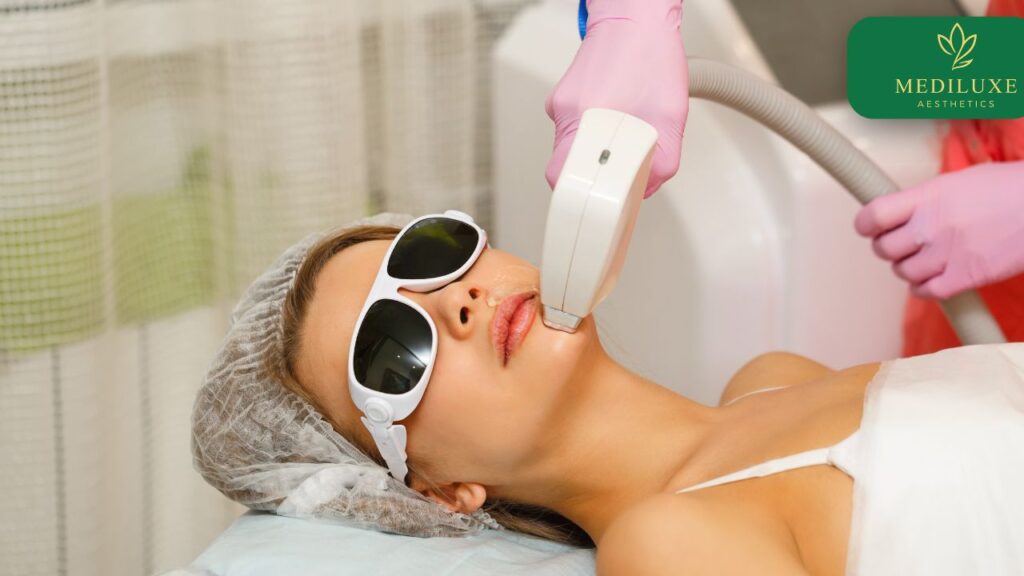
Overview
Most people who have tried laser hair reduction and been disappointed share a version of the same story. They went somewhere, had several sessions, and either the results were patchy, the skin reacted badly, or the hair came back faster than expected. And the common thread in most of these stories is not that laser hair reduction does not work. It is that the wrong technology was used for the wrong skin type.
Indian skin is not the same as the lighter skin tones most older laser technologies were designed for. The melanin distribution is different. The follicle depth is different. And the margin between effective treatment and skin damage is narrower when the device being used does not account for this. Choosing where to go for laser hair reduction in Janakpuri should start with this question: does this clinic use technology that is actually suited to Indian skin, and does the person operating it understand the difference?
At Mediluxe in Janakpuri, Dr Simran Saxena oversees every laser hair reduction treatment. Her training in medical cosmetology specifically covers Indian skin types and the calibration required to produce safe, effective results without the side effects that come from using incorrect settings.
Why Indian Skin Makes Laser Hair Reduction More Technically Demanding
The laser in hair reduction works by targeting melanin, the pigment inside the hair follicle. When the laser energy is absorbed by the follicle, it heats up enough to damage the follicle and significantly reduce its ability to produce hair.
The problem with Indian skin is that melanin is not only present in the hair follicle. It is also present in the skin itself, and in greater quantities than in lighter skin tones. An older or poorly calibrated laser does not distinguish well enough between the two. It heats both, which is effective for the hair follicle and potentially damaging for the surrounding skin. Burns, post-treatment hyperpigmentation, and uneven skin tone are the typical outcomes when this goes wrong.
This is why the device matters as much as the operator. And why both matter far more than the price.
Which Laser Technologies Work for Indian Skin?
Not all lasers are equal for Indian skin tones. Here is what the science actually supports.
A diode laser operates at a wavelength that penetrates to the follicle depth without the same surface absorption risk as older technologies. It is one of the most widely recommended options for medium to dark skin tones and produces consistent results when settings are properly calibrated. For most Indian patients, diode laser is the standard first-line recommendation.
Nd: YAG laser operates at a longer wavelength that penetrates deeper and has less melanin absorption at the skin surface. This makes it the safest option for the darkest skin tones and for areas where the skin is particularly reactive. Results can take slightly more sessions, but the safety profile for deeper Indian skin types is significantly better.
IPL (Intense Pulsed Light) is not technically a laser. It uses broad-spectrum light rather than a focused wavelength. For lighter skin tones with dark hair, it can work reasonably well. For Indian skin, the lack of wavelength specificity creates a higher risk of surface skin reactions and generally less precise follicle targeting. Most clinics that offer IPL for Indian skin are making a compromise based on equipment cost rather than clinical appropriateness.
At Mediluxe, the technology and settings are chosen based on the individual patient’s skin tone, hair colour, and the area being treated rather than a single protocol applied to everyone.
What Determines How Many Sessions You Will Need?
This question comes up at every first consultation, and the honest answer is that it varies. But it varies for specific, predictable reasons.
Hair grows in cycles. Only follicles in the active growth phase respond to laser treatment at any given session. Follicles in the resting or transitional phase are unaffected and will need to be caught in a subsequent session. This is why multiple sessions spaced weeks apart are necessary, regardless of how effective the technology is.
Beyond this, the number of sessions depends on:
• Hair density and thickness in the treatment area
• The contrast between hair colour and skin tone: darker hair on medium skin responds more quickly than very fine or light hair
• Hormonal factors, particularly for facial hair in women, where ongoing androgen activity drives follicle stimulation
• How consistently you follow pre and post-treatment instructions
Most body areas require 6 to 8 sessions. Facial areas, particularly the chin and jawline in women, often need more because of the hormonal component. Realistic expectations built around these factors produce better outcomes than promises of complete permanent removal after three sessions.
What Happens Before and After Each Session
Before treatment, the area should be shaved 24 hours in advance. Waxing and threading pull the hair root out, which is exactly what the laser needs to target. Sun exposure in the days before a session affects how safely the laser can be calibrated and should be avoided.
After each session, some redness and mild sensitivity are normal and settle within a few hours. The treated hairs shed over the following two to three weeks. This looks like growth initially, but it is the follicle expelling the damaged hair, not new hair growing. Waxing or threading between sessions removes this and interrupts the treatment process. Shaving is always fine.
Sun protection on treated areas after each session is non-negotiable, particularly in Delhi’s climate. Unprotected UV exposure on recently treated skin can trigger post-inflammatory pigmentation that is difficult to reverse.
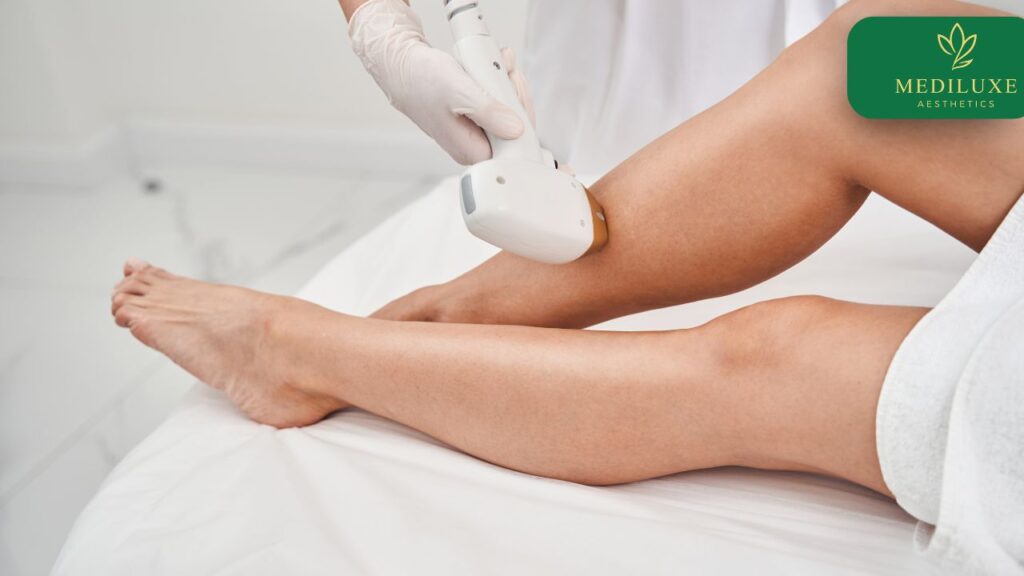
How to Know If Your Clinic Is Doing This Correctly
Patients considering laser hair reduction often review the full range of aesthetic services at Mediluxe to plan complementary treatments during the same course.
A few things worth checking before you commit to a course of sessions:
The clinic should be able to tell you specifically which laser technology they use and why it is appropriate for your skin tone. A consultation that jumps straight to booking without this conversation is a red flag.
The person performing the treatment should be medically qualified or operating under direct medical supervision. Laser hair reduction is a medical procedure, not a beauty treatment, and the difference matters when something needs to be adjusted mid-session.
Settings should be adjusted at every session based on how the skin responded to the previous one, not locked in after the first appointment and left unchanged.
You can explore the full range of aesthetic services at Mediluxe to understand what else is available for skin health alongside laser hair reduction if multiple concerns are being addressed at once.
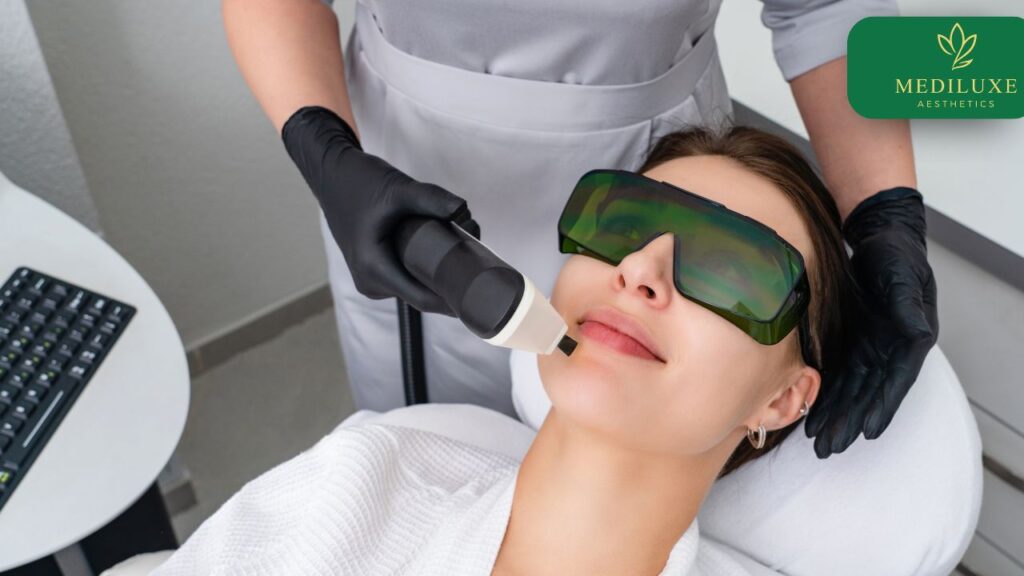
Conclusion
Laser hair reduction in Janakpuri works for Indian skin when the right technology is used and the settings are calibrated properly for each patient’s skin tone, hair type, and treatment area. The results from doing this correctly are genuinely significant and lasting. The results from doing it incorrectly range from disappointing to actively damaging. The difference is almost entirely in the clinic and the person operating it, not in the concept of laser hair reduction itself.
Frequently Asked Questions
Q. Is laser hair reduction painful for Indian skin tones in Janakpuri?
Most patients describe the sensation as a quick snap or mild warmth. Modern laser systems include cooling mechanisms that reduce discomfort significantly. Indian skin types do not inherently experience more pain than other skin types when the correct laser and settings are used.
Q. Can laser hair reduction cause permanent skin darkening on Indian skin?
Post-treatment hyperpigmentation is a risk when incorrect settings are used or when treated skin is exposed to the sun without protection afterward. Using the appropriate laser technology with properly calibrated settings and consistent SPF after each session reduces this risk significantly.
Q. How far apart should laser hair reduction sessions be in Janakpuri?
Body areas are typically treated every 4 to 6 weeks. Facial areas are often treated slightly closer together, around 3 to 4 weeks, because the hair growth cycle in facial areas is shorter.
Q. Is laser hair reduction suitable for all areas of the body?
Yes, including the face, underarms, arms, legs, bikini line, back, and chest. The technology settings and session spacing are adjusted based on the specific area being treated.
CTA
Book a Laser Hair Reduction Consultation at Mediluxe, Janakpuri