
Overview
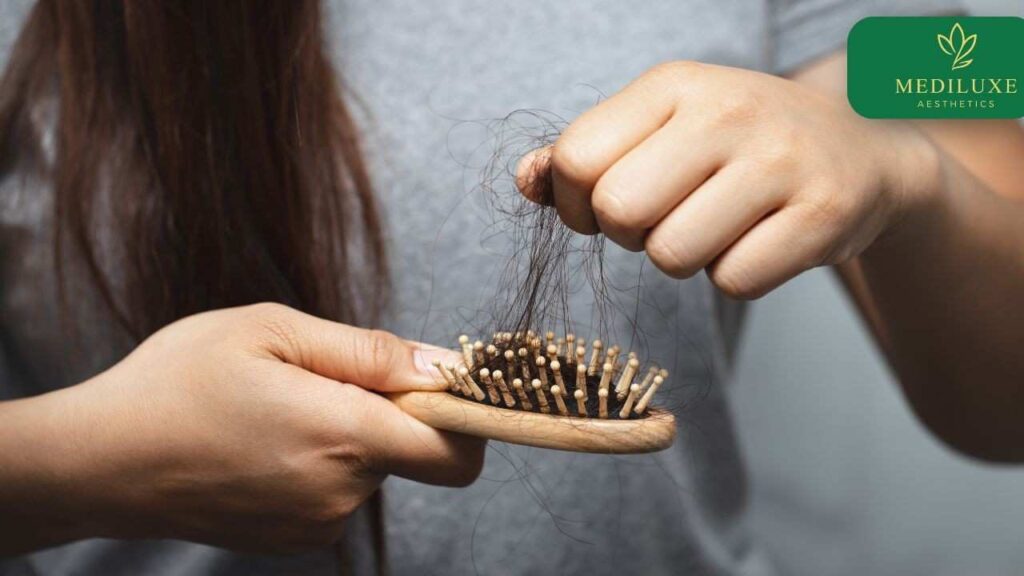
Postpartum hair fall is common enough that most new mothers hear about it before it happens to them, which does not make it any less alarming when clumps of hair start coming out in the shower a few months after delivery. Understanding what is normal, what timeline to expect, and when it actually needs treatment rather than patience can save months of unnecessary worry.
For real patient results and behind-the-scenes clinic updates, follow Mediluxe on Instagram, or call +91 92118 75290 to speak with the clinic directly.
Why Postpartum Hair Fall Happens in the First Place
During pregnancy, elevated estrogen levels extend the growth phase of hair, which is why many women notice thicker, fuller hair while pregnant. After delivery, estrogen levels drop sharply, and the hair that was held in the growth phase enters the shedding phase all at once, typically starting around three to four months postpartum.
This is a hormonal shift, not a sign that something has gone wrong, and for most women it resolves on its own within six to twelve months as hair cycles return to normal.
The medical term for this pattern is telogen effluvium, which simply describes a large batch of hair entering its resting and shedding phase together rather than the usual staggered pattern. Because pregnancy delayed that shedding for many months, it can feel far more dramatic when it finally happens all at once, even though the total hair lost is not usually more than what would have shed gradually anyway.
What a Normal Postpartum Shedding Pattern Looks Like
Diffuse thinning across the whole scalp, rather than a specific bald patch, along with noticeably more hair in the brush or shower drain, is the typical pattern. It usually peaks around four to six months postpartum and gradually slows as the hair cycle normalises.
If you are also noticing early signs unrelated to pregnancy, our general guide on when home remedies stop being enough for hair fall covers the broader signs worth watching for.
Comparing the shedding to your pre-pregnancy baseline, rather than to the unusually thick hair you likely had during pregnancy, gives a more accurate sense of whether what you are seeing now is actually excessive or simply a return to normal after several months of extra fullness.
When Postpartum Hair Fall Actually Needs a Consultation
If shedding continues well past the twelve-month mark, if you notice actual bald patches rather than diffuse thinning, or if hair fall is accompanied by fatigue, scalp irritation, or other symptoms, it is worth ruling out thyroid changes, anaemia, or nutritional deficiencies that are common in the postpartum period and can compound hormonal shedding.
A simple blood panel alongside a scalp assessment can clarify whether you are dealing with expected postpartum shedding or something that needs separate treatment.
The panel most clinics start with checks iron and ferritin levels, thyroid function, and vitamin D, since deficiencies in any of these are common in the months after childbirth and can extend or worsen shedding that would otherwise have resolved on its own.
What Treatment Options Look Like If Shedding Persists
For cases that extend beyond the typical window or where regrowth is visibly slow, treatments such as PRP or GFC can support follicle recovery once any underlying nutritional or thyroid issue has been addressed. These are not first-line treatments for the first few months, since most postpartum shedding resolves without intervention, but they can help once the hormonal window has passed and regrowth still lags. Before starting any injectable protocol for postpartum shedding, it is worth reading our guide on who is a good candidate for PRP or GFC to understand who tends to see the best results.
In practice, this usually means waiting at least nine to twelve months and confirming there is no underlying deficiency before considering an injectable protocol, since most women never actually need to take this step at all.
Looking After Your Skin and Energy During This Phase, Not Just Your Hair
Postpartum months affect skin tone and texture as much as they affect hair, even though hair tends to get all the attention. Some new mothers notice their skin looking duller or more uneven during this period as well. Once your doctor confirms you are ready for aesthetic treatments again, our guide on HydraFacial vs Medifacial in Janakpuri: which do you need can help you decide what fits at this stage of recovery.
Conclusion
Most postpartum hair fall is a temporary hormonal shift that resolves within a year without any specific treatment. Knowing the difference between expected shedding and a pattern that needs medical attention is what actually matters, rather than panicking at the first extra strand in the shower drain. Book a postpartum hair fall consultation with Mediluxe Aesthetics in Janakpuri
Looking to compare more treatments before you decide? Browse the full Mediluxe blog library for more guides on postpartum hair fall and hair regrowth treatments.
Frequently Asked Questions
1. When does postpartum hair fall usually start?
Ans. It typically begins around three to four months after delivery and peaks between four and six months postpartum.
2. How long does postpartum hair fall last?
Ans. For most women, it resolves within six to twelve months as hormone levels and hair cycles return to normal.
3. Should I take supplements for postpartum hair fall?
Ans. A blood panel to check for anaemia, thyroid changes, or nutritional deficiencies is a better starting point than starting supplements blindly.
4. When should postpartum hair fall be evaluated by a professional?
Ans. If shedding continues past twelve months, involves actual bald patches, or comes with other symptoms like fatigue, it is worth a proper consultation.
5. Is postpartum hair fall worse for second or third pregnancies?
Ans. Not necessarily. The pattern is more closely linked to individual hormone shifts and overall health during that specific pregnancy than to how many pregnancies you have had.
6. Can breastfeeding affect how long postpartum hair fall lasts?
Ans. There is no strong evidence that breastfeeding itself prolongs shedding, though ongoing nutritional demands during breastfeeding make a deficiency check worthwhile if shedding feels excessive.
CTA
Book a postpartum hair fall consultation with Mediluxe Aesthetics in Janakpuri